
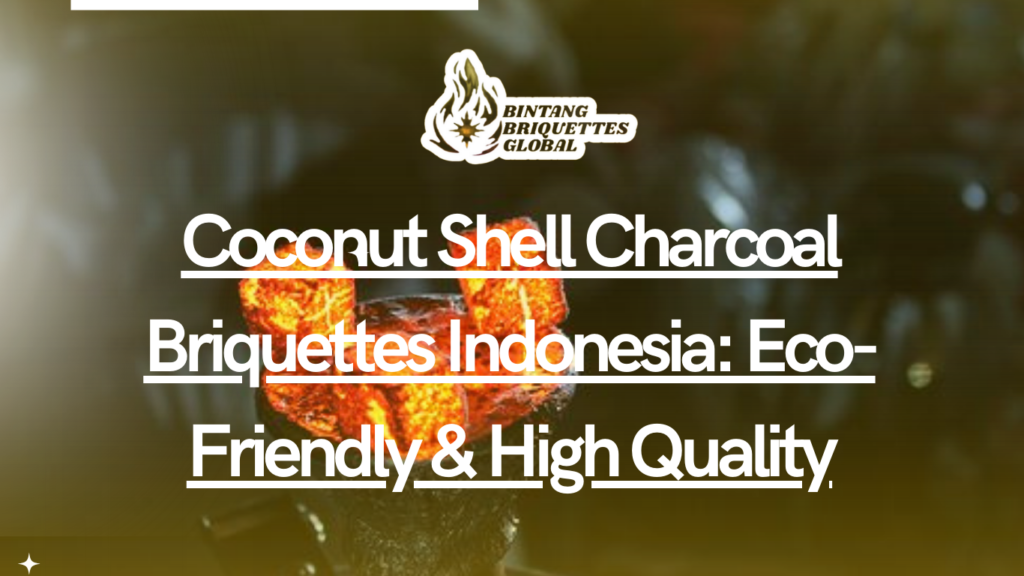
Coconut Shell Charcoal Briquettes Indonesia are increasingly becoming a preferred choice in the global export market due to their superior quality and eco-friendly nature. Indonesia, with its vast coconut plantations, produces an abundance of coconut shells, which, when processed into high-quality charcoal briquettes, provide a sustainable fuel option for various applications. The world is gradually shifting toward more environmentally-conscious products, and Coconut Shell Charcoal Briquettes Indonesia are an excellent response to this growing demand for sustainable, high-performance charcoal.https://charcoalchalabi.com/id/
In this article, we will delve into the process, advantages, applications, and global demand for Coconut Shell Charcoal Briquettes Indonesia, and why businesses worldwide should consider sourcing this eco-friendly product from Indonesia.
Read More : Exporting Charcoal Briquettes from Indonesia: Premium Quality for Various Industries.
1. Introduction to Coconut Shell Charcoal Briquettes From Indonesia
Indonesia is one of the largest coconut-producing countries globally, and its coconut shells have become a highly valued raw material for producing Coconut Shell Charcoal Briquettes. The utilization of coconut shells to create charcoal briquettes is a brilliant example of a circular economy, where what would otherwise be a waste product is transformed into a valuable, sustainable resource.
These charcoal briquettes are used extensively in grilling and barbecuing, industrial applications, and even in energy production. They are also in demand in the production of activated carbon, a key ingredient in air and water purification. The global recognition of the superior quality of Coconut Shell Charcoal Briquettes Indonesia makes them an ideal product for export, as they meet international standards for performance, efficiency, and environmental impact.
2. The Process of Producing Coconut Shell Charcoal Briquettes From Indonesia
The process of producing Coconut Shell Charcoal Briquettes Indonesia involves several key stages, starting with the collection of coconut shells and ending with the shipping of the final product to international markets. Each step is critical to ensuring the production of high-quality briquettes that meet global standards.
2.1. Harvesting and Collection of Coconut Shells
Coconut shells are collected as a byproduct of coconut harvesting. Coconut farmers in Indonesia have long discarded these shells as waste after extracting the coconut meat and water. However, this byproduct has been found to be a high-quality raw material for charcoal production. The shells are collected, sorted, and cleaned before being processed further. This stage ensures that only the best shells are used, free from contaminants or any harmful materials that might affect the quality of the charcoal.
In Indonesia, the harvesting process takes place year-round due to the country’s tropical climate, ensuring a constant supply of coconut shells. This consistent availability of raw materials makes Indonesia an ideal location for large-scale charcoal production.
2.2. Carbonization: Converting Shells into Charcoal
The next stage of production is the carbonization process, which involves heating the coconut shells at high temperatures in a controlled environment. This is done in a furnace or kiln, where the shells are heated in the absence of oxygen to prevent combustion. Instead, the heat breaks down the organic material within the shells, leaving behind carbon in the form of charcoal.
During the carbonization process, volatile compounds are expelled from the shells, and the remaining product is pure charcoal. The temperature, duration of the process, and the airflow within the furnace are all carefully controlled to ensure that the charcoal retains its high calorific value and desired properties.
2.3. Briquette Formation and Shaping
Once the coconut shell charcoal has been produced, the next step is to turn it into briquettes. The charcoal is ground into a fine powder, and this powder is mixed with a binder, typically starch, to form a paste. The paste is then pressed into molds to form uniform briquettes. The briquettes are of varying shapes, including cylindrical, square, or hexagonal, depending on market preferences.
The briquettes are then dried to remove any remaining moisture. This is a crucial step because excess moisture can affect the burn quality of the charcoal. Once dried, the briquettes are ready for packaging and shipment.
2.4. Quality Control and Testing
After the briquettes are shaped and dried, they undergo stringent quality control tests. These tests are essential to ensure the final product meets the performance standards required by international markets. The tests usually include checks for the following:
- Burn time: The briquettes must burn consistently for a specific amount of time.
- Heat output: The briquettes must produce a high and consistent level of heat.
- Ash content: The amount of ash produced after burning should be minimal.
- Size and shape uniformity: The briquettes should be of consistent size and shape to ensure ease of use and quality performance.
Only those briquettes that pass these tests are packaged and prepared for export.
3. Benefits of Coconut Shell Charcoal Briquettes From Indonesia
Coconut Shell Charcoal Briquettes Indonesia offer numerous advantages that make them a sought-after fuel source in both domestic and international markets. These benefits make them an attractive choice for businesses across multiple industries.
3.1. Eco-Friendly and Sustainable
The primary benefit of Coconut Shell Charcoal Briquettes Indonesia is their eco-friendliness. Coconut shell charcoal is a renewable resource because coconut trees produce coconuts year-round. By using the shells, which are otherwise discarded, the charcoal production process helps reduce waste and contributes to the sustainable use of resources.
Additionally, coconut shell charcoal is produced without the need for deforestation. Unlike traditional charcoal, which is often made by cutting down trees, the production of coconut shell charcoal helps preserve forests and protect biodiversity. This makes it a sustainable and environmentally responsible option for consumers and businesses looking to reduce their carbon footprint.
3.2. High Calorific Value
One of the defining characteristics of Coconut Shell Charcoal Briquettes Indonesia is their high calorific value. This means they generate more heat per unit of fuel compared to many other types of charcoal. The high calorific value makes these briquettes highly efficient, reducing the amount of fuel needed to achieve the desired temperature. This property is especially important in industries that require high heat for processes such as metalworking and ceramics.
For consumers, especially those in the hospitality and grilling sectors, the high calorific value ensures that food is cooked efficiently, with a consistent and even heat distribution.
3.3. Long Burn Time and Low Smoke Emission
Another key feature of Coconut Shell Charcoal Briquettes Indonesia is their long burn time. Due to the dense nature of coconut shells, the briquettes can burn for an extended period, making them ideal for grilling and barbecuing. This extended burn time also means fewer interruptions during industrial applications, allowing businesses to work uninterrupted for longer periods.
Additionally, coconut shell charcoal produces significantly less smoke than traditional wood charcoal. This cleaner-burning fuel improves grilling and cooking environments while reducing air quality impact. For foodservice businesses, less smoke means lower residue buildup, reducing maintenance costs.
3.4. Low Ash Content
The low ash content of Coconut Shell Charcoal Briquettes Indonesia is another important advantage. The minimal ash left after burning means less cleanup and maintenance. It also improves charcoal efficiency by using ash as an insulating layer, preventing heat loss. This benefits both consumers and businesses by reducing cleanup time and effort.
3.5. Versatile Applications Across Industries
The versatility of Charcoal Briquettes Indonesia is one of its key selling points. These briquettes are used in a wide variety of applications across different industries, including:
- Barbecuing and Grilling: With their long burn time, high heat, and minimal smoke, these briquettes are perfect for outdoor cooking, barbecuing, and grilling. Restaurants and food vendors around the world prefer them for their consistent and efficient performance.
- Industrial Use: Coconut shell charcoal briquettes are widely used in various industrial processes that require heat, including metalworking, ceramics, and the production of activated carbon.
- Activated Carbon Production: The high carbon content of coconut shells makes them ideal for producing activated carbon, which has numerous applications in air and water purification, as well as in industrial filtration systems.
- Alternative Energy: The renewable nature of coconut shell charcoal has made it a suitable alternative energy source, particularly in areas where wood is scarce.
4. The Global Demand for Charcoal Briquettes From Indonesia
The demand for Coconut Shell Charcoal Briquettes Indonesia is on the rise due to the growing interest in sustainable, eco-friendly products and the increasing need for efficient fuel alternatives. This is reflected in the export trends, where countries around the world are importing these briquettes in larger quantities.
4.1. Rising Global Awareness of Sustainability
As global awareness of environmental issues increases, more businesses and consumers are choosing sustainable alternatives to traditional products. Coconut Shell Charcoal Briquettes Indonesia are seen as a superior alternative to conventional charcoal due to their lower environmental impact and renewable nature. This trend is especially strong in the EU, North America, and parts of Asia, where consumers seek environmentally responsible products.
4.2. Expanding Market Access
Indonesia’s strategic location and strong infrastructure enable efficient export of Coconut Shell Charcoal Briquettes globally. The extensive port system ensures fast shipping, making Indonesia a reliable supplier in the global market.
4.3. Competitive Pricing and High-Quality Standards
Indonesia is able to offer Coconut Shell Charcoal From Briquettes at competitive prices without compromising on quality. Indonesia’s abundant coconut trees ensure a steady raw material supply, reducing costs and making the product affordable globally. Manufacturers follow international standards for production, quality control, and safety, guaranteeing high-performance briquettes.
5. Conclusion: Why Choose Coconut Shell Charcoal Briquettes From Indonesia?
Coconut Shell Charcoal Briquettes Indonesia represent a sustainable, high-quality fuel option that businesses across various industries can rely on. Whether you’re looking for an eco-friendly fuel for grilling, a versatile industrial fuel, or a raw material for producing activated carbon, Indonesia offers an ideal source for premium charcoal briquettes.
Choosing Coconut Shell Charcoal Briquettes Indonesia supports sustainability while ensuring high quality and performance. With excellent calorific value, long burn time, and eco-friendly production, they are ideal for businesses and consumers committed to the environment.
If you are interested in sourcing Coconut Shell Charcoal Briquettes Indonesia, contact us today to explore how we can meet your business needs with reliable, high-quality, and sustainable charcoal solutions.