

Introduction
Why Choosing the Right Shisha Charcoal Supplier Is More Critical Than Ever
bintangbriquettes.com – In the world of shisha charcoal importing, choosing a supplier is no longer just about comparing prices or checking basic specifications like fixed carbon, ash content, or moisture levels. Today’s importers face a far more complex reality. A single mistake—whether in production, packing, or documentation—can disrupt your entire supply chain before the goods even reach your port.
That is why selecting a reliable shisha charcoal supplier is not a simple purchasing decision, but a long-term strategic move.
The Hidden Complexity Behind Shisha Charcoal Production
Most people assume coconut charcoal briquettes are straightforward to produce, but experienced buyers know the truth:
the quality of shisha charcoal is shaped by dozens of unseen factors.
These invisible factors include:
- the age and density of the coconut shells,
- the stability of carbonization temperature,
- the habits of the screening operators,
- the airflow inside the drying room,
- and even the weather conditions during storage.
This means great quality doesn’t come from a single process — it comes from a consistent operational architecture that only a few suppliers truly master.
Why “Import-Ready” Suppliers Stand Out
A true export-focused supplier understands more than just production.
They understand:
- international buyer expectations,
- documentation requirements,
- shipment planning,
- container loading stability,
- and long-term quality consistency across many batches.
This is where trusted Indonesian exporters like Bintang Briquettes differentiate themselves — by providing production transparency, strict quality control, and export systems built specifically for long-term importer partnerships.
What This Article Will Help You Achieve
This article is not the usual “how to choose a supplier” guide found everywhere on Google.
Instead, it offers a strategic and practical framework to help you:
- identify the internal structure of a reliable shisha charcoal supplier,
- recognize invisible quality signals most buyers miss,
- understand what makes a supplier truly “import-ready,”
- evaluate suppliers using a new stability matrix,
- and choose a long-term partner who protects your business reputation.
If you want a supplier who can deliver stability—not just promises—this guide will point you in the right direction.
VISIT US:
1. The Hidden Architecture Behind a Reliable Shisha Charcoal Supplier
What Most Importers Never See Inside a Supplier’s Operation
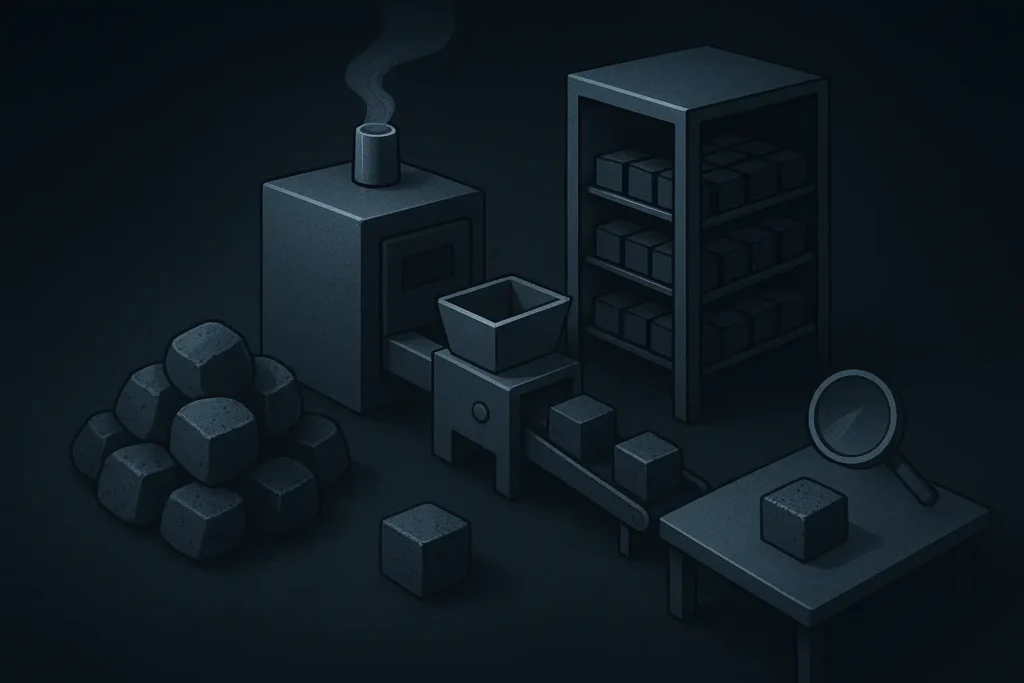
When importers evaluate a shisha charcoal supplier, they often focus on visible elements—product samples, certificates, packaging photos, and pricing.
But the true indicator of a reliable supplier lies in the internal structure of their operations. This “hidden architecture” determines whether a shipment will arrive with consistent quality or become a costly mistake.
A strong supplier is not defined only by the charcoal they produce, but by how well they organize their people, systems, and raw material flow.
The Foundation: Raw Material Governance
High-quality coconut charcoal begins long before briquettes are formed.
A reliable supplier has a raw material governance system, which includes:
- stable sourcing contracts with coconut farmers,
- moisture screening at shell collection points,
- density control to maintain BTU stability,
- separate storage areas for dry and semi-dry shells,
- monitoring weather impact on shell moisture.
Without this system, suppliers may produce “good samples” but fail to deliver consistent container loads.
This is one area where exporters like Bintang Briquettes invest heavily — ensuring predictable input quality every month.
The Backbone: Production Flow That Prevents Quality Variations
Most factories follow the same general steps: carbonization → crushing → mixing → pressing → drying → packing.
But what differentiates a reliable supplier is how these steps are controlled.
Import-ready suppliers maintain:
- shift-based calibration for hydraulic pressure,
- digital logs for carbonization temperature,
- standardized mixing ratios across multiple batches,
- synchronized drying cycles to avoid moisture spikes,
- QC checkpoints at every production stage.
These internal systems prevent the biggest problem in the shisha charcoal industry: batch-to-batch inconsistency.
The Human Factor: Trained Teams That Understand Export Standards
A supplier’s people are just as important as their machines.
Suppliers who consistently export to Europe and the Middle East usually have:
- trained QC teams familiar with export specs,
- operators who understand the importance of uniform pressure,
- supervisors who can detect defective briquettes by sound and texture,
- admin teams that handle export documents without mistakes,
- loading teams trained to pack pallets safely for long-distance shipping.
This human expertise is part of the “hidden architecture” that protects importers from risk.
The Indicator: Stability You Can Feel Without Visiting the Factory
The best part?
You don’t need to visit the factory to understand this architecture.
You can detect it from:
- how fast suppliers answer technical questions,
- how detailed their production explanations are,
- how transparent they are when discussing weaknesses,
- the way they describe their raw material flow,
- and the consistency of their sample reports.
Trusted exporters like Bintang Briquettes openly share process details because a stable system leaves nothing to hide.
VISIT US: Coconut Shisha Charcoal Factory
2. Beyond Product Specs: The Invisible Quality Signals Buyers Often Miss
Why Standard Specifications Don’t Tell the Full Story
Most importers rely heavily on specifications like ash content, carbon percentage, burning time, and moisture level.
These specs are important, but they only reveal the surface of a supplier’s quality.
Two suppliers can show identical specs on paper, yet deliver completely different results in real-world usage.
Quality in shisha charcoal is not determined by numbers alone; it is defined by the consistency behind those numbers.
This is where invisible signals—often overlooked even by experienced buyers—become essential in selecting a trustworthy supplier.
Invisible Signal #1: The Dust and Residue Pattern Inside the Factory
The color, thickness, and distribution of dust inside a factory can tell you more than any document.
For example:
- Too much fine black dust indicates unstable crushing processes.
- Greyish dust everywhere hints at dry mixing issues.
- Clean zones near pressing machines indicate strong workflow discipline.
Suppliers like Bintang Briquettes maintain strict dust control, not just for cleanliness but because dust patterns reflect process stability.
Invisible Signal #2: The Briquette Arrangement in Drying Rooms
Very few importers know this trick.
The way briquettes are arranged during drying reveals how well the factory understands airflow dynamics:
- Uniform spacing = consistent heat distribution
- Random stacking = uneven moisture
- Overload on racks = risk of internal cracks
You can learn a lot from simple production photos—if you know what to look for.
Invisible Signal #3: The Supplier’s Response Style to Technical Questions
A reliable shisha charcoal supplier answers questions clearly, specifically, and without hesitation.
Their technical explanations reflect how well they control their production.
A weak supplier will:
- avoid details,
- give vague answers,
- or change explanations between messages.
A strong supplier will:
- explain their carbonization temperature range,
- describe their mixing formula philosophy,
- and outline their QC workflow.
This transparency is a sign of operational maturity — something Bintang Briquettes consistently provides to international buyers.
Invisible Signal #4: Variations in Batch Photos and Videos
Many importers underestimate small visual differences in production materials:
- If color varies slightly between batches → inconsistent carbonization.
- If briquettes look different across pallets → unstable pressure settings.
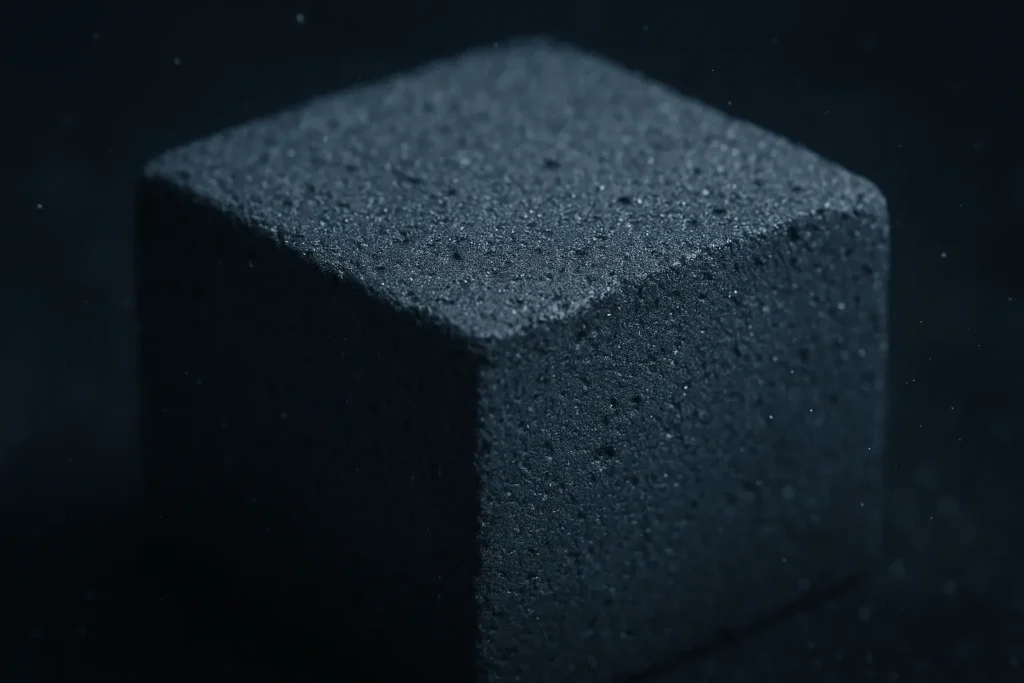
- If the surface texture changes → moisture control issues.
These signals usually appear before major quality problems — meaning you can detect risks early if you pay attention.
Invisible Signal #5: How the Supplier Talks About Their Weaknesses
This is one of the strongest yet rarest signals.
A mature supplier openly acknowledges challenges such as:
- rainy season moisture spikes,
- shell supply fluctuations,
- capacity limits,
- packaging delays.
Why? Because transparent suppliers have systems to control these issues.
Suppliers who claim “no problem at all” are often hiding operational instability.
Factories like Bintang Briquettes prefer realistic communication — and this honesty builds long-term trust with importers.
VISIT US: Coconut Shisha Charcoal Factory
3. The Hidden Quality Markers Every Shisha Charcoal Supplier Should Meet
3.1 Consistency in Heat, Density, and Shape
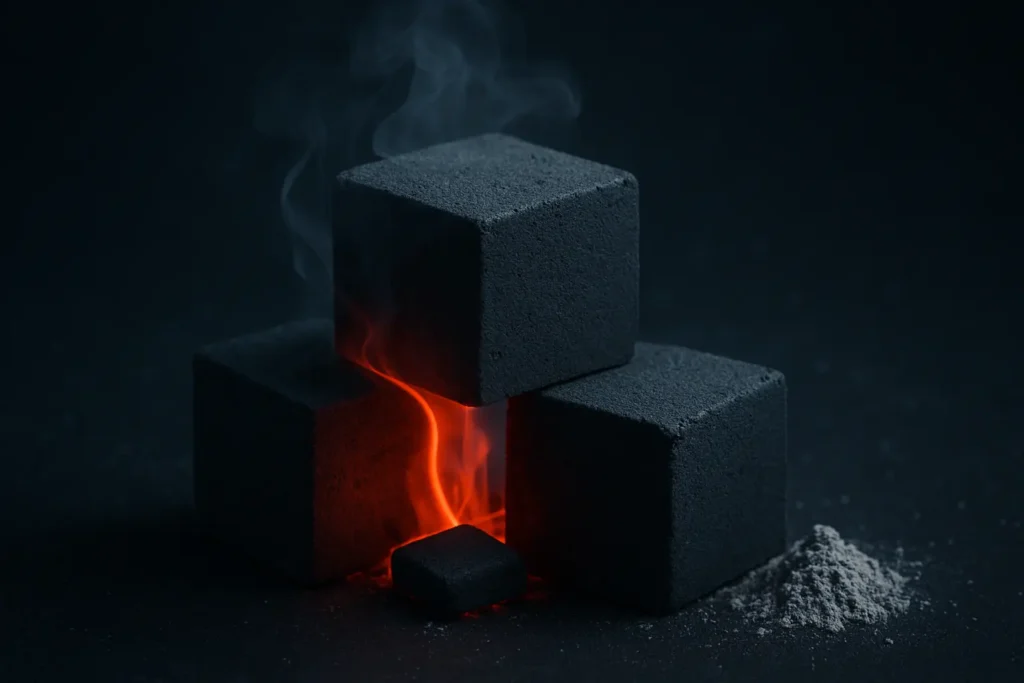
Most buyers focus on visible specs—but true quality lies in consistency. A reliable shisha charcoal supplier maintains stable density, moisture levels below 5%, and precise cube dimensions (22, 25, or 26 mm). This consistency ensures equal heat distribution, longer sessions, and zero flavor contamination.
Brands like Bintang Briquettes use controlled carbonization cycles and precision hydraulic pressing to achieve this level of uniformity.
3.2 Ash Management and Clean Burn
Low ash is not just a selling point; it determines whether your customers trust your product. A good supplier targets white or silver ash, not yellow or black.
Low-ash charcoal allows shisha lounges to reduce coal changes, while importers gain a strong selling advantage.
3.3 Raw Material Purity: 100% Coconut Shell
Premium briquettes must be made from 100% coconut shells, not mixed wood charcoal. Pure coconut shell charcoal burns hotter, longer, and cleaner.
Your chosen supplier should provide verifiable sourcing—ideally from sustainable farms.
3.4 Odorless and Spark-Free Performance
A professional shisha charcoal supplier must ensure briquettes ignite without sparks and burn without chemical smells.
This is where reputable brands like Bintang Briquettes excel, thanks to an advanced carbon-filtering stage that eliminates any unpleasant aroma.
3.5 Third-Party Testing & Export Documentation
Serious importers require independent lab tests—moisture, volatile matter, ash, and fixed carbon.
A trustworthy supplier will provide:
- COA (Certificate of Analysis)
- MSDS
- Export documents (Invoice, Packing List, BL, COO)
- Factory compliance certificates
If a supplier cannot provide these, that’s a red flag.
VISIT US: Charcoal Briquettes Indonesia: A Renewable Energy Solution from Coconut Shells
4. How to Evaluate Whether a Shisha Charcoal Supplier Is Trustworthy
4.1 Factory Transparency and Real Production Capacity
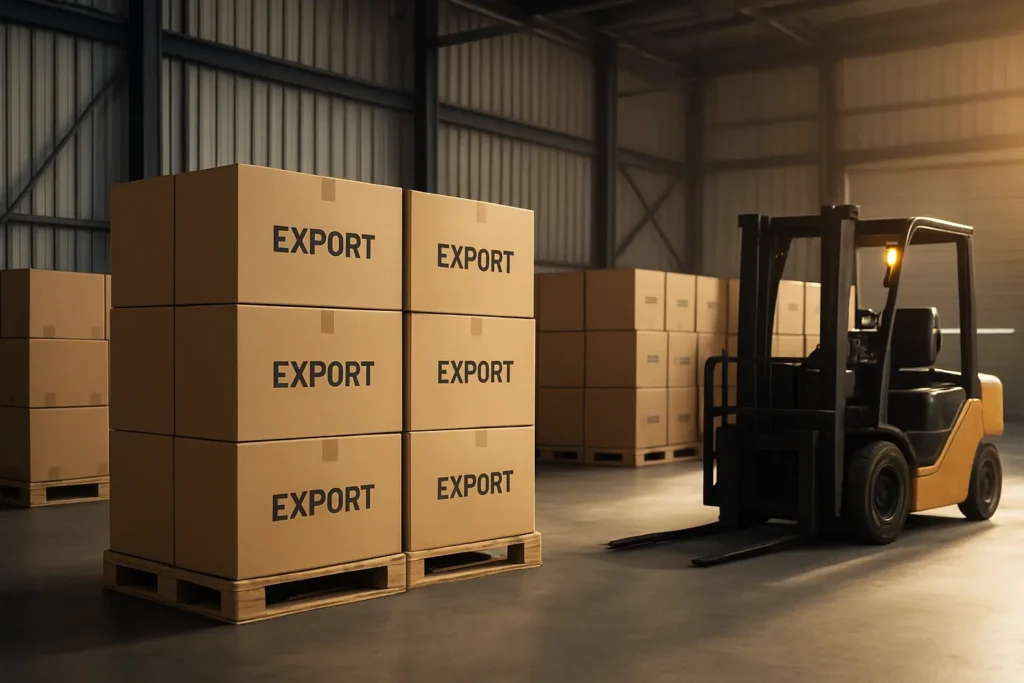
A legitimate shisha charcoal supplier should be able to clearly show how much they can produce per month. Many suppliers claim 500–700 tons/month, but only a few actually operate real factories.
Reliable brands like Bintang Briquettes are transparent about daily output, production lines, and actual drying capacity—helping importers plan long-term shipments with confidence.
4.2 On-Ground Quality Control You Can Verify
Trustworthy suppliers have internal QC at three critical points:
- Carbonization QC – stable fixed carbon
- Briquette pressing QC – density and shape accuracy
- Final inspection QC – ash level, color, drop test, moisture
If your supplier cannot explain these checkpoints, reconsider the partnership.
4.3 Clear Communication and Fast Response Time
A dependable supplier communicates quickly—answering inquiries, sending samples, and preparing export documents without delay.
Slow or vague communication often signals production issues, unreliable capacity, or unprofessional operations.
Teams like Bintang Briquettes maintain 24/7 communication for buyers in Europe and the Middle East to ensure smooth imports.
4.4 Honest Sample Testing (No “Perfect Sample, Bad Cargo” Trick)
A dishonest supplier may send perfect samples but deliver poor-quality bulk cargo.
A good indicator of trustworthiness is when:
- The sample matches the factory’s standard production
- You can choose your own sample from a video call
- They allow a third-party inspector to check cargo before loading
Professional suppliers encourage transparency—not hide behind excuses.
4.5 Stable Pricing and Long-Term Contract Options
The best suppliers don’t change prices every week. They offer consistent rates and long-term contracts for serious importers.
Look for suppliers who can lock prices for 3–12 months and provide clear justification if market conditions change.
5. Why Working With the Right Shisha Charcoal Supplier Shapes Your Long-Term Business Success

5.1 Reduced Risk of Shipment Problems
Choosing the right shisha charcoal supplier protects importers from costly issues like:
- moisture spikes during transit
- broken briquettes
- inconsistent ash levels
- delays in production or container booking
A reliable partner doesn’t just ship charcoal—they safeguard your business from risks that can damage your reputation in the market.
5.2 Stable Quality Means Repeat Customers
The hookah market depends heavily on customer satisfaction and consistency. If your charcoal performs differently every month, retailers and lounges will quickly switch suppliers.
That’s why consistent factories such as Bintang Briquettes use the same raw material source, controlled carbonization, and calibrated hydraulic machines to maintain stable quality for long-term buyers.
5.3 Faster Business Growth With Predictable Supply
Importers grow faster when they can guarantee supply for their distributors.
A high-reliability supplier ensures:
- predictable monthly production
- smooth scheduling
- on-time loading
- clear timeline for reorder
This creates a stable supply chain—something buyers in Europe, the UAE, and Saudi Arabia consider essential.
5.4 Easier Market Expansion Through Product Consistency
Once a product has stable burn time, shape, density, and ash color, it becomes easier for importers to scale into:
- new cities
- new distributors
- new lounge partnerships
Consistency is the foundation of expansion, and only a professional supplier can provide this level of uniformity.
5.5 A Supplier Who Also Supports Your Branding
The best shisha charcoal factories do more than produce—they support their clients with marketing resources such as:
- professional product photos
- COA & SGS documents
- branding options
- private-label packaging
Teams like Bintang Briquettes even help buyers create premium packaging concepts to stand out in competitive markets.
VISIT US: Charcoal Briquettes vs Lump Charcoal
Conclusion
Choosing the Right Shisha Charcoal Supplier Determines Your Long-Term Success
Finding a reliable shisha charcoal supplier is no longer just about price or basic specifications. It is about securing a partner who understands your market, protects your supply chain, maintains consistent quality, and supports your business growth. Importers who succeed in the Middle East, Europe, and North Africa all share one common strategy: they only work with factories that can guarantee stability from the first container to the hundredth.
A Good Supplier Protects Your Reputation
Your customers judge your brand based on the burn quality, ash color, and consistency of your charcoal. If your supplier fails, your reputation is the one at risk—not theirs. That’s why choosing a supplier with real production systems, transparent communication, and strong QC is not an option; it’s a requirement.
Bintang Briquettes as Your Trusted Import Partner
Factories like Bintang Briquettes combine:
- controlled raw material sourcing
- stable carbonization systems
- precise hydraulic pressing
- strict quality checks
- export-ready documentation
- 24/7 communication for international clients
This ensures that every shipment is consistent, safe, and reliable—exactly what serious importers need to grow their business.
Build a Long-Term Partnership, Not Just a Purchase
The most successful importers don’t simply buy charcoal—they build long-term partnerships with suppliers who understand their needs and support their expansion. Choosing the right shisha charcoal factory today sets the foundation for profits, customer satisfaction, and sustainable growth tomorrow.
VISIT US: Unlock the Secret to Perfect BBQ: Why Charcoal Briquettes Chimney Starter is a Game-Changer!